
 Archana G
The way food delivery works has undergone an enormous transformation. Restaurants have two main methods to reach their customers: building their own restaurant mobile app or using food delivery aggregators. Both have benefits and their downsides, and what you choose depends on each business’s growth objectives, restaurant profit margins, customer behaviors, and long-term digital plans.
Online ordering is no longer a choice or a sign of luxury. Customers expect convenience, speed, personalization, and transparency, especially when ordering food from a restaurant mobile app. Aggregators make it easy for users to get food delivered, and they add control of visibility, customer relationships, and pricing.
Branding in Restaurant Mobile Apps vs Food Delivery Aggregators
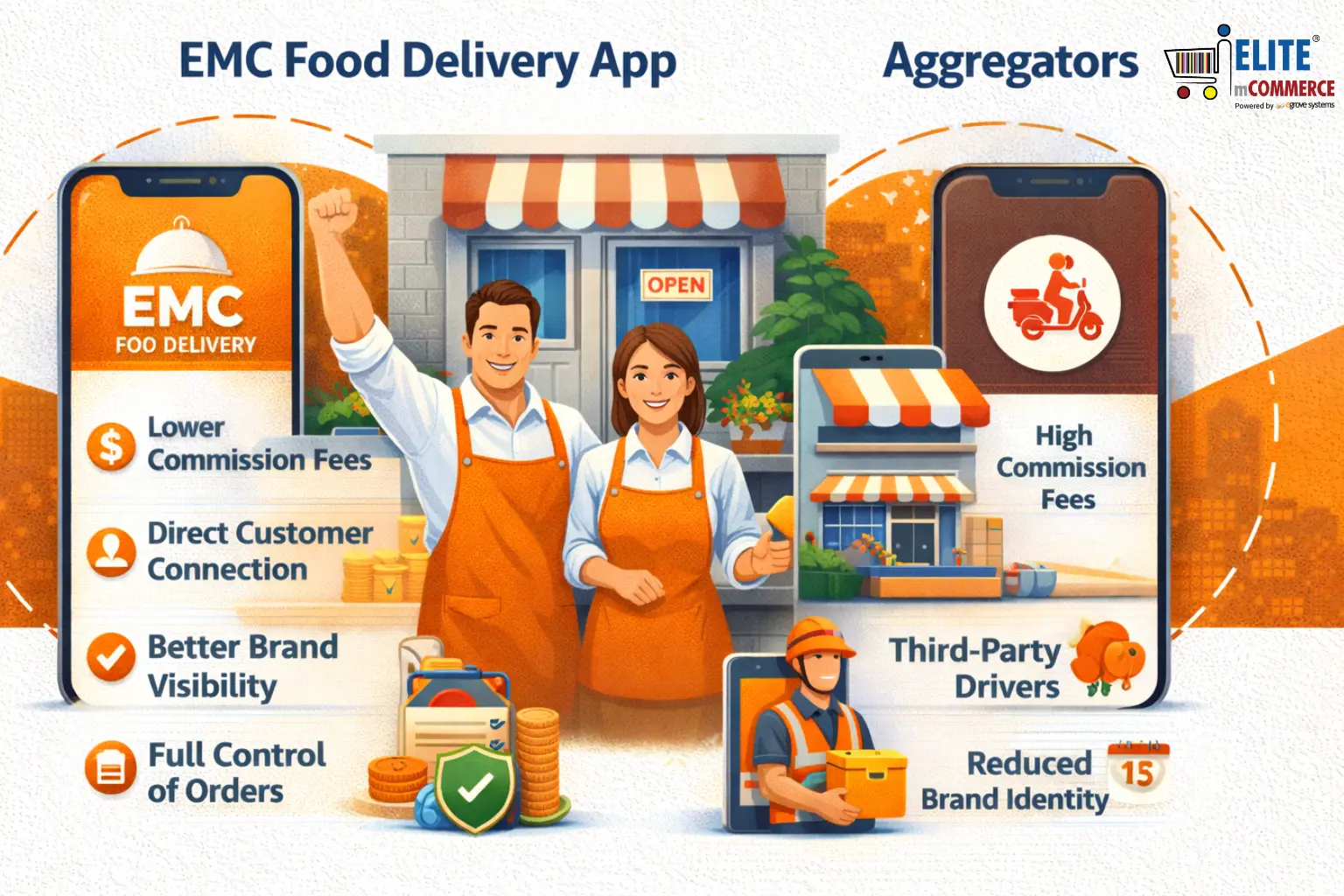
With Aggregators
- Branding does not matter because the restaurant is just one of many listings.
- Customers rarely remember your brand.
- Promotions show the aggregator, not you.
- Discovery is dependent on the aggregation algorithm, not loyalty.
This effectively dilutes a brand you’d worked so hard to establish.
With a Restaurant Mobile App
- The restaurant has total control over the look and feel of the app.
- Your brand images are front and center.
- Personalized experiences foster an emotional connection.
- Loyalty programs help with long-term retention.
Branding is extremely important for restaurants that sell an exotic menu, specialty items, or premium-priced establishments.
As per the National Restaurant Association’s 2025 report, off-premises orders account for nearly 75% of restaurant traffic, underscoring the need for stronger mobile and digital ordering channels.
Pros and Cons of Food Delivery Aggregators for Restaurants
Food delivery aggregator platforms come with their distinct positives and negatives.

Pros:
The aggregators provide
- Quick access to a huge customer base
- Eliminate the need to build your own tech infrastructure
- External management of your delivery logistics
- Customers already trust it
- Immediate visibility for new restaurants
For growth in the early stages, this visibility is often immensely valuable.
The Limitations:
The aggregators also have their cons, like
- High commissions (15-35% per order)
- Compromise pricing
- Limited access to restaurant customer data ownership
- Ranking algorithms
- Lesser brand equity because they are just viewed as one of many options by customers.
Another aspect of restaurant app vs. aggregator is that some customers assume the pricing of the restaurant is the same as if they were ordering the items through the restaurant, and most of the time the commissions charged restaurants cause them to inflate their menu pricing on the aggregator’s platform.
Why a Branded Restaurant Mobile App Beats Third-Party Delivery

Utilizing your own restaurant mobile app will eliminate many of these limitations the aggregator business model places on restaurants. You and your restaurant will have full control of brand identity, customer experience, loyalty options, and pricing when you utilize your own restaurant mobile app.
Why Owning Your Own Restaurant Mobile App Benefits Restaurants
When restaurants own their own app, they will be able to:
- Foster direct relationships with customers
- Fully control their brand identity, pricing, menu items, and promotions
- Charge less or no commissions
- Provide or offer loyalty incentives based on their own terms
- Send flood notifications about offers and updates
- Track customer behavior in depth
- Provide comparable online and offline experiences for customers
Having this level of control lends itself to increased long-term retention of customers and promotes your restaurant brand even more in online food delivery solutions.
The Disadvantages
It does take a while to develop and market your own restaurant mobile app. You will have:
- Initial investment
- Ongoing maintenance
- Time and cost to market/service the app to start gaining downloads, and necessary follows for your restaurant if you have no engagement
- Order management and delivery operations
This is why many restaurants elect to use a hybrid approach of using a food aggregator app on the multi-device ordering platform. Ultimately, once the restaurant mobile app is developed, they can utilize the simulator and start with a hybrid restaurant mobile app approach.
Restaurant Mobile App vs Aggregator: Which Model Protects Your Profit Margins?
For many restaurant owners, the question of restaurant mobile app vs. aggregator ultimately boils down to price. The following is what needs to be understood:
- Aggregator Economics: Commissions, delivery fees and promotional fees can add up to a significant share of revenue. In more competitive aggregator environments, restaurants must discount menu items to stay relevant, which further erodes profitability. In an order volume context, aggregators will strain your restaurant profit margins tremendously.
Restaurant Mobile App Economics: Having a restaurant mobile app has an upfront and ongoing cost, but as order volume builds, cost per order drops steadily. You can charge less per order without commissions, and more of that profit goes to the restaurant after app maintenance and delivery operations. Additionally, a well laid out loyalty program will accelerate order frequency while furthering profitability of the app.
Customer Ownership
A major distinction between restaurant mobile applications and Online food delivery solutions is restaurant customer data ownership. Aggregators own the restaurant customer data ownership like order history, customer insights, spending patterns, etc.
The restaurant only knows the details of the order, not about the longer-term pattern the restaurant needs to effectively market. With no historical behaviors, the restaurant cannot develop direct loyalty or personalized offers.
When Food Delivery Aggregators Make Sense for Your Restaurant

With the mobile app, the restaurant has:
- Full insight into purchase behavior
- The ability to send directed campaigns to customers
- Personalized loyalty programs
- Direct communication via push notifications.
- Control on repeat customer engagement.
When Food Delivery Aggregators Make Sense for Your Restaurant
Aggregators make sense if:
- You’re just opening a new restaurant and need immediate visibility.
- You don’t offer delivery.
- Your menu sells itself on an aggregator
- You want the impulse-ordering traffic.
Aggregators help you get discovered quickly, even if it’s not best for consumer ownership in the long run.
When a Dedicated Restaurant Mobile App Is the Better Long-Term Strategy
A dedicated app is best when you:
- Want a loyal customer base
- Want better restaurant profit margins
- Care about brand identity
- Want to control your promotions and customer relationships
- Need detailed reports
End Point
Customer relationships are much better for long-term development, both for you and for your restaurant profit margins, when they belong to you and not a third-party platform. It’s important to understand the strategic value provided by each channel. Aggregators give you reach and convenience for your customer, while your own app allows you to foster long-term customer loyalty, build better restaurant profit margins, and build your own brand. Ultimately, the best path is one that builds your brand, defends your margin, and engages with your customers, wherever they may be.
If you’re serious about margin growth and customer retention, get in touch with Elite mCommerce to explore your restaurant’s app potential.